

Nightshift Nursing
|
Sleep
Deprivation Is a Major Occupational Hazard
2.1 million health care professionals are in jobs that require extended hours or shift work that compromise their normal sleep schedule that can lead to sleep deprivation. The adverse effects are profound. Lack of sleep predisposes nurses to medical errors, auto accidents, impaired productivity, decreased work performance, and poor health. (1)
In one study, a questionnaire was administered to nurses at a large academic hospital. The results proved nurses who worked a rotating schedule, when compared to nurses who predominately worked day shifts, were more likely to fall asleep at work and get less sleep over all, and were nearly twice as likely to report committing a medication error. (2)
Many healthcare professionals will attest that sleep deprivation from shift work may lead to occurrences that jeopardize not only themselves, but also their patients. Fatigue from long shifts can reduce attention to detail, affecting critical thinking and performance. Although sleep is not cumulative, sleep deprivation is. The more hours a person works, the longer it takes to complete a task. More mistakes are made, and alertness is markedly decreased. (3)
The symptoms of sleep deprivation are clear: difficulty getting up, a feeling of tiredness throughout the shift, irritability, lack of energy, memory problems, and decreased concentration. According to the National Sleep Foundation research, people who sleep less than six hours per day are also more likely to be tired, sad, stressed, and/or angry. (3)
Ongoing sleep deprivation of as little as an hour a day can lead to a sleep debt over time that is not easily erased. (4) When we have a sleep debt, our inclination to fall asleep the next day increases. The larger the sleep debt, the stronger the tendency to fall asleep. Sleep debt does not go away by itself. Sleeping is the only way to erase sleep debt. (5)
How Can Night Shift Nurses Get the Sleep They Need?
There are several small things that night shift nurses can do to increase both their quality and quantity of sleep. One of the easiest is to make sure their bedroom is totally dark. A totally dark bedroom tricks the mind into releasing the sleep inducing hormone Melatonin, allowing them to fall asleep faster and sleeping longer.
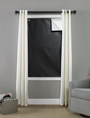
Get the sleep you need with the blackout EZTM Window Cover. The blackout EZTM is an affordable, easy to use window cover for people who work the nightshift. The key to a "Good Days SleepTM" is a totally dark room. The blackout EZTM blocks all light at the window, providing a totally dark room for long, deep, restful sleep. Using the blackout EZTM, you fall asleep fast, without the tossing and turning you now experience. You awake restored and ready to go!
Better than black out curtains and other black out window treatments, the blackout EZTM Window Cover has no rods, no sewing, no hooks, and no gaps! Easier to install than blackout curtains and other black out window treatments, the blackout EZTM requires no screws, no tools, and no measuring!
|
||||||||||
Categories

Become an Affiliate
Earn 10% per sale and get $10 just for signing up! Click the button below to find out more.

Company Information
Customer Service
Secure Shopping Guaranteed